The Interim Public Administration of Karenni State
Aftermath of the attempted military coup carried out by the terrorist military led by Min Aung Hlaing on February 1, 2021, peaceful demonstrations broke out across Karenni State. Over time, these demonstrations escalated into armed resistance movements and the state’s administrative mechanism stopped operating its function.
To replace the collapsed administrative system, various functional groups were established to provide public services. These included the People’s Administrative (Pa-Ah-Pha) formed under the guidance of the National Unity Government (NUG), administrative mechanisms organized by Ethnic Revolutionary Organizations (EROs), locally established People’s Self-Administration bodies and committees for education, health, and humanitarian support set up by the Karenni State Consultative Council (KSCC). Together, these groups coordinated their efforts to deliver public services to the best of their abilities.
Facing that situation, the Karenni State Consultative Council (KSCC) adopted an Interim Arrangement and outlined a 10-point Political Roadmap, which led to the formation of the Interim Executive Council (IEC) on June 6, 2023.
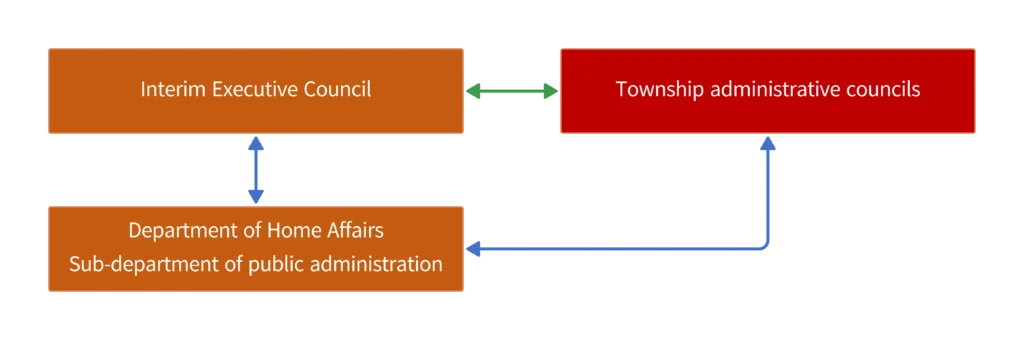
The Interim Executive Council (IEC) has established its twelve state-level departments, guided by the principles of unity, inclusiveness, collective leadership, transparency, accountability, and responsibility, as well as respect for minority rights and diversity. Among these departments, the Ministry of Home Affairs has been structured into four Sub-departments: consisting of Public Administration, Rule of Law and Security (Karenni State Police), Immigration and Emergency Rescue. The Public Administration Sub-department is currently managing the administrative system for the whole of Karenni State.
Objectives
The role of the Public Administration Sub-department is,
- To establish a public administration system at the federal-democracy unit level of Karenni State during the interim period with the participation of all stakeholders and in line with federal-democracy standards.
- To support the fulfillment of the basic needs of the public, such as security, rule of law, education, health, and general administration, during the interim period.
- To establish effective administrative mechanisms to ensure the safety of the people’s lives and protect them from the various kinds of dangers that they currently face.
In line with these objectives, administrative strategies have been formulated and are being implemented.
Coordinating and collaborating with the relevant stakeholders
The Karenni State Interim Executive Council has arranged its administrative strategies in accordance with Article 44 of the Interim Arrangement, formed the administrative territory, and engaged with the existing ethnic revolutionary organizations in carrying out management. Furthermore, it has also been placed on ensuring the participation of all diverse forces, engagement, and discussion have been made to form townships in line with federal standards and reflecting the will of the people. Before establishing township-level administrations, several field visits for public consultation meetings were conducted with revolutionary groups, youth, women, CSOs and local community leaders. Based on the feedback and willingness of the people, the townships were then formed. At present, a total of 16 townships, 1 town, and 92 village tracts have been formed in line with the aspirations of the local people.
Appointment of the Administrators
For the administrative mechanism, the process of electing the administrators in each level of village tract, town/ township is made through the “Election Management Committee,” which was formed in April 2024. The residents of each village elect and appoint their local administrators, consisting of the Village Chairperson and the Secretary.
The village administrators elect the Committee members of the Village Tract Administration. At the township level, the Election Management Committee oversees the election of the Township Level Administrative Committee by using a secret ballot system, and then members of the Township Interim Council are appointed. Each Township Administrative Committee is formed with 7 to 15 members, depending on the number of village tracts within the township.
Administrative Mechanism, Reporting, and Accountability
Village administrations report to the Village Tract administration, while Village Tract Administrators report to Township Administrators. The Township Administrative Committees then submit their reports through step by step to the Public Administration Sub-department.
The Township Administrative Committees, in collaboration with state-appointed township-level departmental heads, including the Township Education Officer, Township Health Officer, and other relevant officials, are responsible for implementing public service activities. Furthermore, to establish a clear and systematic division of power between state and local administrations, the Draft of Karenni Interim Local Administration Policy Guideline has been developed, with the consultation of relevant experts, civil society organizations, legal and judicial representatives, departmental officials and township representatives.
Budget allocation
4 % of monthly tax revenue collected by the central fund of the Karenni Interim Executive Council is allocated for the expenses of the township administration and to carry out development projects in each township.
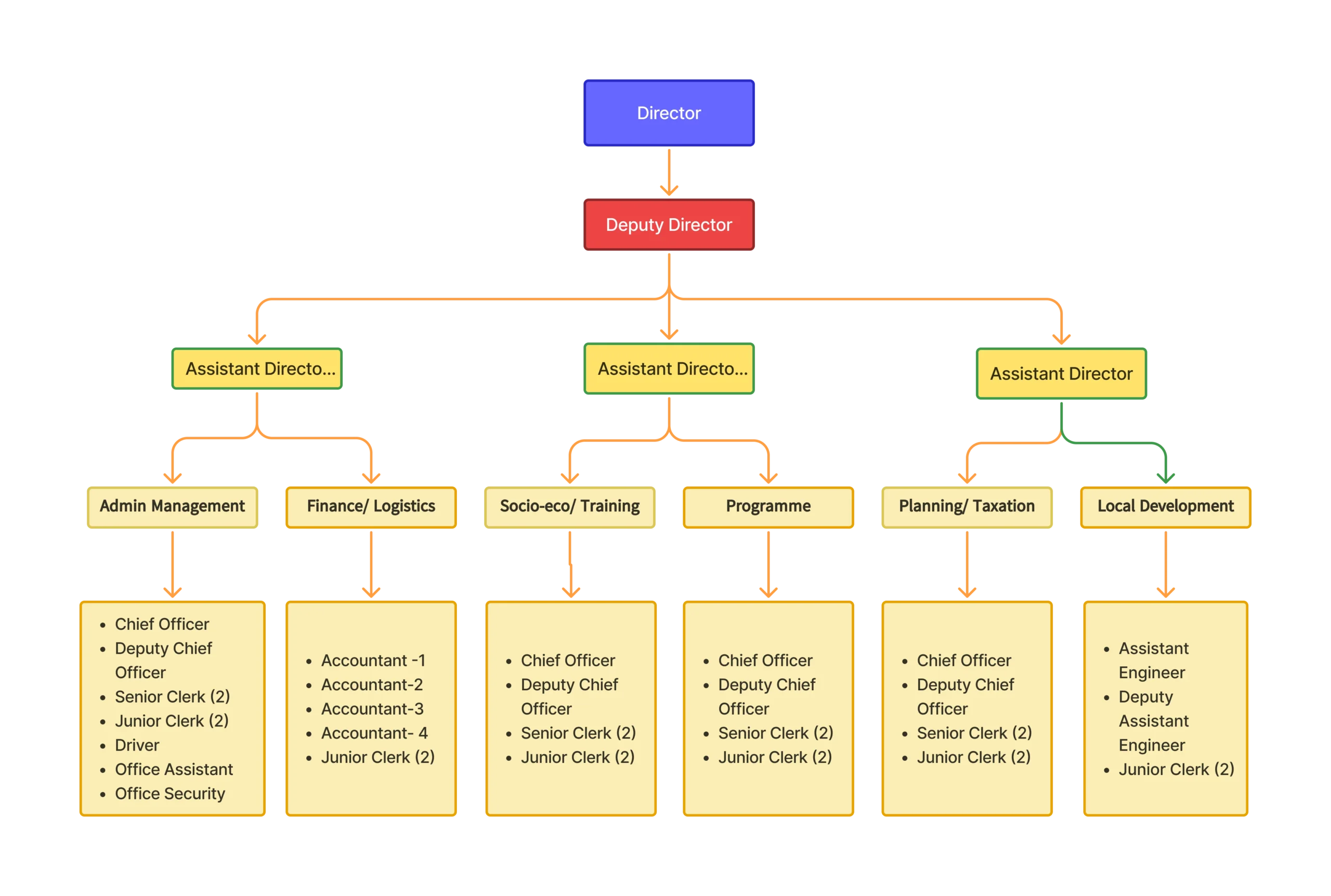
Organization Structure